


Movie Monday: Hamnet

Updated: Dec 16, 2025

Back when I was first building my website, and searching for direction and structure as both a person and as an artist as I came out of a nearly 17-year-long relationship, I gave myself the task of posting reviews every week for “Movie Mondays.” I haven’t done one in a long long time, but I saw Hamnet this weekend and I just HAD TO. So…spoiler alerts and all that.
Forgive me if this is all a bit stream-of-consciousness but Hamnet WRECKED ME. Like I had to hold myself back from ugly, loud sobbing. I didn’t want to ruin these amazing moments for the audience I was sitting with, sharing in this experience, which is ironic since the ending of the movie is all about the power of shared grief through artistic expression. But when Hamnet dies, it’s absolute silence – brilliantly done by Chloe Zhao and the amazing performance of Jessie Buckley – and I was overtaken by such emotion I let out a grunt as I tried to hold myself back. And then Jessie’s Agnes broke with a scream and I felt it through my whole being.
There are few moments where movies have moved me this strongly and it electrified me walking out and reminded me of that feeling that only movies have given me – of life, of connection to others, and of my desire to be part of that process. I can tell you that the other movies that come to mind that made me feel this powerfully were also experienced IN A THEATER WITH OTHER PEOPLE. And the meta resonance of how that plays with the ending of Hamnet, as the play Hamlet is performed for an audience, performed for us…was transcendent.
I’ve been fascinated by how audiences consume film and television since college. I wrote my college honors thesis on compulsive rewatching, using my own relationship with the movie Say Anything. I was too young to have seen that movie in the theater, but it became my “baseline” movie as a teen and young adult. If you liked that movie, we could be friends. If you didn’t, well, something was wrong with you. For people I was interested in dating it was a similar litmus test – what were they willing to do for love? Now, in retrospect, Llyod Dobbler – brilliantly played by John Cusack – does exhibit some stalker tendencies. But he’s a respectful stalker, standing outside her bedroom window playing their song, and keeping his unreturned calls limited. And in truth, when I watched that film, it was Lloyd’s character that I identified with the most. I felt equally lost in the landscape of college, jobs, and careers, but the one thing that I did identify with Diane was her relationship with her domineering father. I estimated I had seen the movie about 100 times. It was my comfort food, and I was amazed at seeing other, often young women, exhibit similar viewing habits with movies about love like Titanic. Compulsive rewatching isn’t limited to women or stories about love, but that was the type of movie I would rewatch over and over again. Why? It helped me make sense of the world, or myself, of what I wanted. For someone who struggled with BIG FEELINGS and BIG THOUGHTS, and who was also a poor reader so books were a struggle, movies and television were my way into understanding life. I could step into someone else's shoes, anywhere in the world, and live life in a different way and understand another part of it. For the re-watching, it's often movies and shows that deal with emotions and thoughts that I identify with, and struggle with. Lately, it’s the first 12 episodes in Season 1 of Outlander. Not the full season, just those first 12 episodes. It’s some of the best writing and filmmaking I’ve ever experienced and the struggle of navigating a new world, of finding new love when you didn't want to is something I still wrestle with nearly 15 years after my divorce.
And that’s the thing with the visual medium – it’s an EXPERIENCE. And even though we are collectively watching something together, two people can experience it differently and interpret it in very different ways. There’s a resonance that films require, not just in everything that comes together in the miracle of film production, but what the audience member brings in the form of their own emotional and psychological makeup, the experiences that shaped them, all mixing and mingling in the ether between the seat and the screen. Not only is the movie projected but the audience member must project themselves in order to find some understanding. And that either resonates or not, which brings such a personal nature to watching movies. Even if you agree with the person next to you, you’ve experienced something slightly differently because YOU are different people and you’ve both put up different things in the bargain of watching the movie.
I tried hard not to have any expectations going into Hamnet. I knew people said it was beautiful, that it would wreck you, so I figured it was sad. My husband pointed out that it was about the loss of a child, which was historically accurate, and how that may have inspired the writing of Hamlet. But even without knowing that much about the movie, I came with a ton of baggage.
My grandmother was a Shakespearean scholar and professor. She was also a bit of a hoarder and after she died when I was 4, my dad would bring out her several copies of the complete works of Shakespeare during sleepovers and have me and my friends read with him “for fun.” It actually was a ton of fun, but also supremely weird. But my best friends and I would perform the witches of Macbeth, the love story of Romeo and Juliet, the tragedy of King Lear…in elementary school. Shakespearean English was not foreign to me and I had dreams in middle school of wowing everyone with my pronunciation and understanding and surely I’d be cast as Juliet! Not so.
I loved Shakespearean plays and growing up in Washington, DC I had the luxury of access to the Folger Theatre and Library. When Kenneth Branagh’s Henry V movie came out…swoon. I recited the scene where the princess practices her English in class and “Once more unto the breach dear friends” became a rallying cry in my family. Eventually, I became an English major in college and studied abroad in London where I took a Shakespeare class with an ancient and preeminent professor who edited the esteemed Arden Shakespeare publications, Richard Proudfoot, and saw more plays. By the end of the semester, I could speed-read Shakespeare and had read almost all of his plays. I was also equally fascinated with the mystery of whether Shakespeare was really the playwright, or a pseudonym. I read books about the history of Shakespeare, I read historical fiction about that time period. Cate Blanchett’s Elizabeth came out and…more swooning.
My senior year of college I had figured out I wanted to be a filmmaker and I did an internship on the Paramount Lot. It was my first time in Los Angeles and it was magical. A movie had come out while I was there that I wanted to see but I had never seen a movie BY MYSELF. It seemed contradictory to how I normally watched movies – with people to talk to afterward, to experience together. But I went, by myself, and of course being LA, especially back then, there were tons of people in the theater at any time of day and I watched Shakespeare in Love and had the same profound feeling that I did watching Hamnet. Except without the sobbing. I remember the ending of that movie, Gwyneth Paltrow walking along the beach, stretched out on a huge screen as Joseph Fiennes’ voiceover opens up Twelfth Night. It just doesn’t get any better. The writing in that script by the brilliant Tom Stoppard, the witty repartee, has also become a staple in how I move through the world. And again, it's about love and life and loss, and how we fold that into our creative work.
That moment in Shakespeare in love where Gwyneth’s maid, played by the always amazing Imelda Staunton, bursts out “he’s dead!” when “Juliet” wakes up in the tomb – I kept thinking about that as I watched Hamnet. I was that Imelda Staunton character, bursting with emotion over something fictitious, forgetting that this wasn’t real…and that was echoed in the evolving performance of Jessie Buckley’s Agnes as she begins to sink into the fiction of the play, to suspend her disbelief, and simply connect. We are watching Jessie’s Agnes go through the very act that we ourselves are performing as an audience.
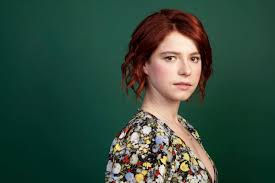
Now…let me just say a few words about Jessie Buckley. Obviously, she’s an incredibly talented actress, but for me personally, it goes even deeper and weirder because she looks JUST LIKE one of my best friends, who also happens to be an actress, Hannah Cabell. I’ve known Hannah since we were 17. I’ve seen her work in plays and movies and television. I’ve watched her face in person and on screen countless times. There’s a greater intimacy in knowing the person in addition to the performer. I feel that way about all my actor friends. But it’s uncanny how much Jessie and Hannah look alike. Not just from a distance but even the way her mouth moves, the tiny expressions. I’m not the only person who has said this. And the character Agnes in all her earthy, witchy, plant-loving-ness is threaded in what I know of Hannah too. As Agnes watches the proxy for her son Hamnet, Hamlet, played on stage, it allows her to connect and grieve, collectively, Jessie's Agnes was my proxy for Hannah…I can’t tell you how profound it was to watch someone who was so hauntingly similar to my dear friend. The resonance between what I was seeing on screen and what I felt, knew, and had experienced, was almost unbearable.

And then that damn Max Richter song. Another deep cut to something so personal. I had first heard On the Nature of Daylight in a yoga class, years ago. Well, probably not for the first time because it’s been used a lot in movies and television, but when I heard it in yoga – and started sobbing (running theme) – I thought it was the ending score to The End of the Affair with another more famous Fiennes brother and Julianne Moore. Another movie that simply wrecked me. And that combination of story, image, and song – it’s what I love about movies, it’s what puts me in awe. So many songs that I love, I love simply because they come from my favorite moments in a movie or television show. But I was wrong about On the Nature of Daylight. It’s not in The End of the Affair and at the time, I didn’t know what the song was called and I became obsessed with figuring out what the song was because it haunted me. I couldn’t figure it out and I needed to because something that moved me to tears needed to be known. I went back to yoga and the instructor happened to play it during warm up and I asked her what it was, and drove home afterward sobbing to it playing through my iPhone. My son is a violist and we talked about the song, and it’s honestly the song I want him to play at my funeral. Which makes me cry just thinking about because I never want to die and I don’t want my kids to suffer heartbreak and sadness. There’s another song my son introduced me to that has the same effect Adagio for Strings by Samuel Barber, and while we’re at it, the Ricky Gervais show Afterlife just reminded me of another one from my middle school days: Billy Joel’s And So It Goes.
How does music have this capability to make us FEEL? I've spent my life studying how filmmakers do it, but I've never understood it from a music standpoint. I honestly don't want to because it feels like magic. I have a love-hate relationship with crying. I obviously am very very prone to it. But I hate doing it. I feel weak and vulnerable. Feminine in a way that feels uncomfortable. But I also will feed into it when I’m on my own. I once went down a rabbit hole after Chris Cornell died and listened to his covers of Patience and Nothing Compares 2 U and some of his other mournful songs on repeat and just sobbed for an hour. Putting On the Nature of Daylight on is a guaranteed way to have a breakdown. For some reason I tend to do this in my car a lot. Driving while sobbing is probably not very safe. And, yes, I do feel crazy. But it’s also so so cathartic. And we need an outlet for our emotions and thoughts, at least I do.
Hamnet touched on one of my greatest fears as a human – the death of a child. I watched my mother experience several miscarriages – including an ectopic pregnancy that put her in the hospital and a 2nd trimester miscarriage – over the years before my brother was born. I went with her to the doctor for checkups. It took a lot of medical intervention for my brother to be born. She couldn’t carry a pregnancy to term (after me) and the whole thing always felt like the most uncertain thing you could ever do. When it was my turn to be pregnant and have children, I didn’t want to name them or even think of them as a “baby” until they were alive and outside of my body. About a month before my first was born, a woman in my prenatal yoga class had given birth to a stillborn baby. She and I shared the same midwife and I was heartbroken for her and worried for me. Thankfully, my son was born just fine, but it was funny watching Hamnet and Agnes giving birth in the woods because my now-husband (second one and not the father of my kids) thinks that that was what I was like as a young mom. And in many ways I was. I was interested in home birth and had friends who did it. I didn’t want to (and didn’t use) any pain killers. My son was born using a birthing stool because I couldn’t find a good way to push in the tub, but my youngest was born in a tub, in the water. I breastfed exclusively…but I was never full hippie, never full natural mom. Never a free birther. I had a healthy respect for modern medicine and human limitations - especially after watching my mother go through her experiences - but also a healthy skepticism based on experience that you sometimes have to be your best advocate.
There were many moments of fear with a newborn, and my son developed anaphylactic-level food allergies by his 1st birthday so Agnes’ vigilance with Judith was something I understood. My youngest went through some dark mental health struggles a few years ago and I tried to brace myself every morning for the idea that maybe my child hadn’t made it through the night – much like Emily Watson’s character in Hamnet telling Agnes that you have to always remember that “what was given can be taken away.” But my therapist told me there would never, ever, be a way to prepare myself for that horror of losing a child so why should I torture myself by imagining it every morning? So I stopped. I tried to “keep my heart open” as they say in Hamnet, and hope for the best. But that feeling when Agnes proclaims she won’t “let” Death take her baby…yeah, that’s what we do as mothers. And so when Hamnet dies and she breaks, I broke with her. It was a safe place to do it and what movies are made for. Hamnet is a testament to that power, of letting emotions be known and named and felt and shared thereby lessening their stranglehold and allowing us to continue living.
And even though my children are now adults, in a way the panic is worse because they are far from me, far from my protection, far from my will. And much like Agnes comes to realize, I know that my will is an illusion.
So Hamnet felt like it was made FOR ME. Though in its creation it’s obvious that the things I’ve connected with, the things that speak to me, speak to others. The ending of Hamnet proves this connection. It literally mirrors the audience back to you, almost as if you’re looking back in time at the Globe Theater from your movie theater seats. It’s why I love this medium, it’s why it never gets old or boring for me.
Hamnet is not perfect. There were things not paid off that were small and simple and in many ways stuck out more because the rest was so magnificent. And the pacing doesn’t drag but it feels suspended, almost flat, which seems by design but as I watched it I wondered “what is this about?” “why are we watching this?” but as Hamnet died and we rounded the corner to the creation of Hamlet and its performance, the ending hit like a freight train and made everything worth it. It’s so so powerful. I don't think I will rewatch it compulsively the way that I've watched happier stuff, I don't think my heart can take it. But I do want to see it again, it was such a lush world and so exquisitely executed and there's more I know I will discover as I watch and rewatch, more that I will understand about the world and myself. I will hold it close, like the other movies that have impacted me throughout my life. Hamnet filled the well of love and creativity and inspiration and it was a joy to see another artist’s masterpiece. Well done, everyone.
And if you’ve made it this far, let me know what you think!


Emulator Games Zone is my new go-to spot for Emulator Games. I was pleasantly surprised by how many genres they cover—from action-packed platformers to strategy and puzzle games. Playing directly online saves so much time, and it’s great to have everything in one place without hunting down ROMs.